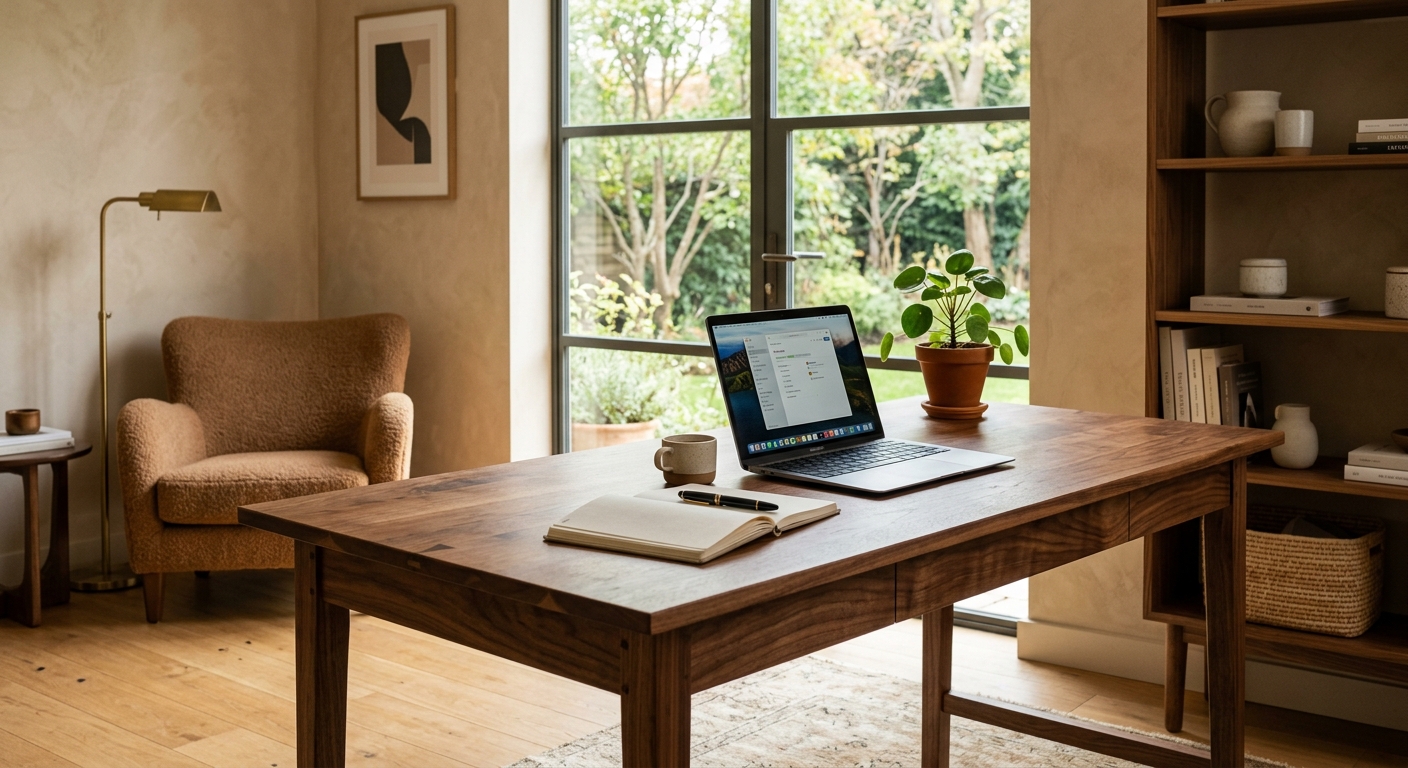
A desk is where you spend a third of your waking hours. It holds your laptop, your coffee, your notes, and your focus. Yet most people spend less time choosing a desk than they spend choosing a phone case.
At Thomas Creations, we have built hundreds of desks for home offices, studios, and workshops. Here is what we have learned about choosing the right one.
Start with Wood Type
The wood your desk is made from determines its durability, appearance, and how it ages. Walnut is rich and dark, with a tight grain that deepens over years. Oak is lighter and more open-grained, with a classic look that works in almost any space. Reclaimed wood brings character and history — no two pieces are the same.
Avoid desks made from particle board or MDF with a wood veneer. These materials sag under weight, swell with humidity, and cannot be refinished. A solid wood desk can be sanded and re-oiled decades from now. A veneered desk cannot.
Size Matters More Than You Think
Before buying, measure your space. Then measure again. A desk that is too small will leave you cramped; one that is too large will dominate the room. For most home offices, a desk between 48 and 60 inches wide provides enough surface area for a laptop, monitor, notebook, and lamp without overwhelming the space.
Depth is equally important. A 24-inch depth is the minimum for comfortable work. A 30-inch depth gives you room for a monitor arm and a keyboard tray without feeling crowded.
Consider Standing and L-Shaped Options
If you sit for long hours, a standing desk can change your health and your focus. Our engineered wood standing desks adjust from 29.5 to 47 inches, letting you switch between sitting and standing throughout the day.
If you need more surface area, an L-shaped desk fits into a corner and gives you two work zones — one for your computer, one for writing or projects. Our 60 x 48 inch L-shaped desk in walnut is one of our most popular pieces for exactly this reason.
Finishes and Maintenance
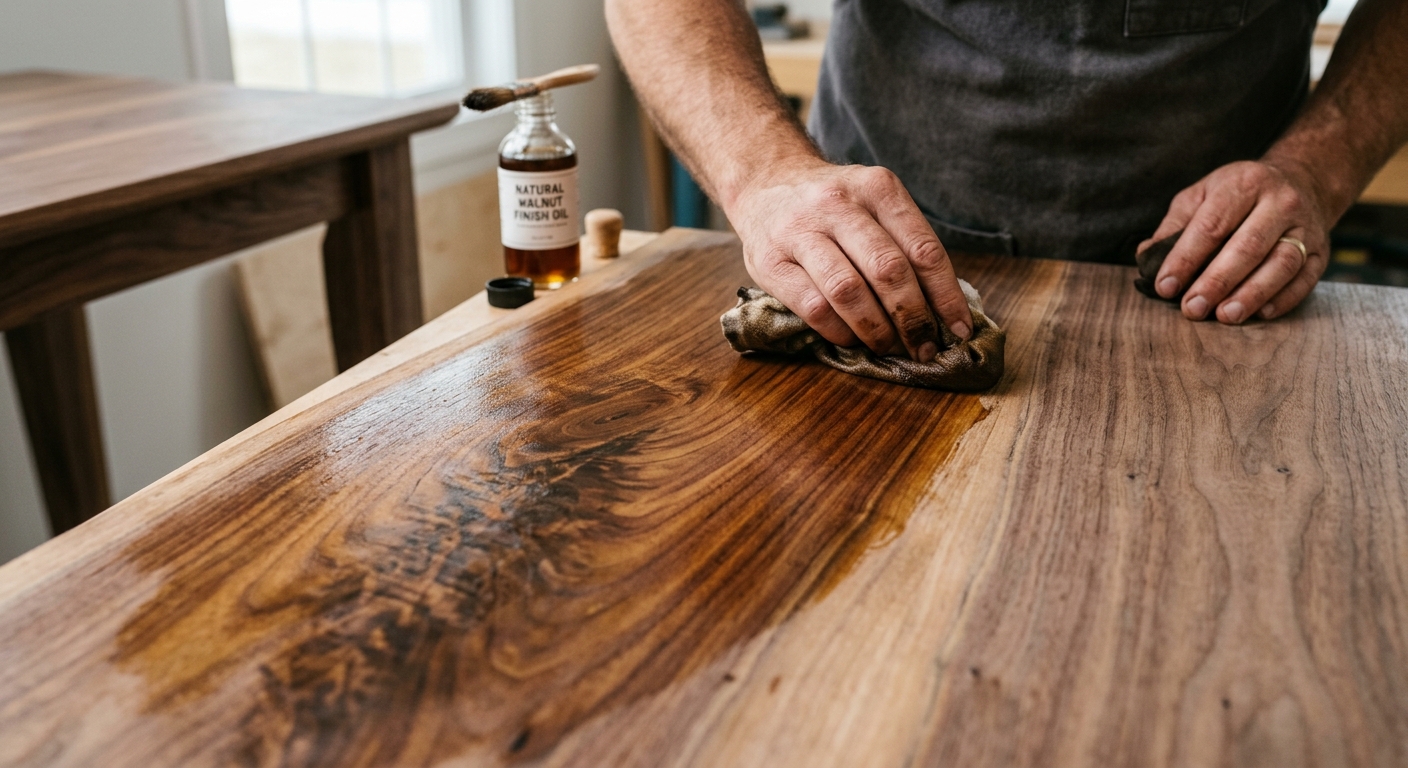
A natural oil finish brings out the wood grain and is easy to maintain — just wipe with a damp cloth and re-oil once a year. A lacquer finish is more durable and water-resistant but cannot be spot-repaired. Choose based on how you use the desk and how much maintenance you are willing to do.
The Bottom Line
A solid wood desk is an investment, but it is one that pays off every day you sit down to work. Choose the right wood, the right size, and the right finish, and you will have a desk that outlasts every computer you ever put on it.